
search
Understanding the legal, privacy, and safety landscape of online harm in Canada.
Online harassment, image misuse, and reputational attacks now intersect with multiple areas of Canadian law — privacy, human rights, civil liability, and evolving federal policy. Clients are looking to you for clear direction in a space where the legal terrain changes faster than the headlines. With public demands for the proposed Online Harms Act to come back before Parliament, your ability to give grounded, up-to-date guidance is more important than ever.
Position yourself as the advisor who can translate uncertainty into strategy. Understand the tools available today, anticipate the shifts coming tomorrow, and help clients protect dignity, privacy, and safety when harm spreads online.
Strengthen your practice by improving your knowledge to:
The CBA is a professional organization that provides educational and networking opportunities for lawyers. Representing more than 36,000 lawyers, judges, notaries, law teachers, and law students from across Canada, the CBA is committed to enhancing the professional and commercial interests of a diverse membership and to protecting the independence of the judiciary and the Bar.
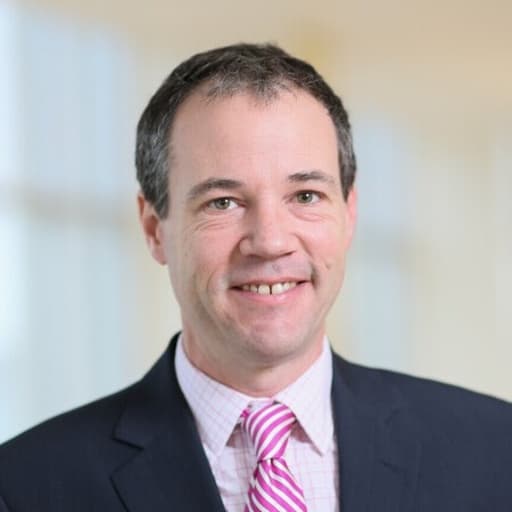
Partner at McInnes Cooper
David Fraser is well-known as one of Canada's leading internet, technology and privacy lawyers. He regularly advises a range of clients – from startups to trillion-dollar companies – on all aspects of technology and privacy laws. David authored the Canada chapter of the global Law Over Borders Comparative Guide to Data Protection. A significant portion of David's practice is devoted to working with American and multi-national businesses in addressing Canadian privacy law issues. This often includes contract negotiations, policy reviews, pre-launch product reviews, addressing complaints and advising with respect to data breaches. For example, David regularly advises Google LLC and has represented the company before the Privacy Commissioner of Canada and the Federal Court of Canada in connection with a range of matters. In addition, David is the Past President of the Canadian IT Law Association and the former Chair of the National Privacy and Access Law Section of the Canadian Bar Association. David has served on the Research Ethics Board of the Capital District Health Authority. He is currently a member of the Joint Data Access Committee of the IWK Health Centre for Women and Children in Halifax, which reviews applications for research access to personal health information. In 2002, David was invited to be an associate of the Institute of Law and Technology. He is a member of the faculty of Dalhousie Law School, where he teaches Internet and Media Law, Law and Technology, and Law and Policy for Digital Innovation. He is on the editorial board of the Canadian Journal of Law and Technology and is a regular contributor to the Canadian IT Law Association's newsletter. Active in the Halifax technology community, David is a long-standing member of the board of directors of Digital Nova Scotia.

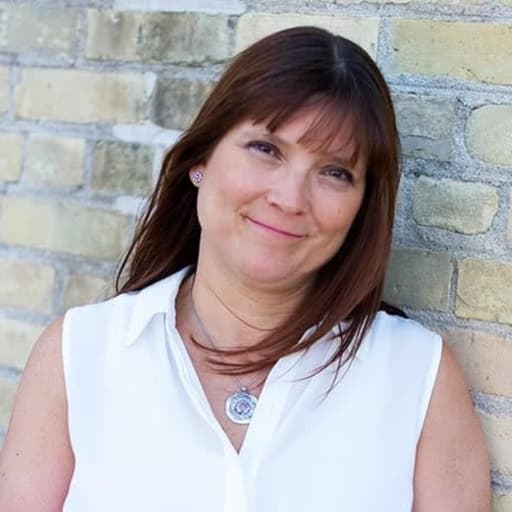
Founder of Tekhnos Law
Cynthia Khoo is a technology and human rights lawyer whose practice sits at the intersection of internet law, privacy, intellectual property, copyright, and civil liberties. She spent 2021–2024 as a Senior Associate at Georgetown Law's Center on Privacy & Technology and now serves as a Senior Fellow at the Citizen Lab (Munk School of Global Affairs & Public Policy, University of Toronto), where she has also been a Research Fellow since 2018 researching stalkerware and algorithmic decision-making's human rights implications. She remains a member of the Ontario bar and takes cases selectively. Her legal work has included representing clients before the CRTC and as an intervener before the Supreme Court of Canada, alongside policy submissions, advocacy strategy, public speaking, and media commentary. In 2021 she completed a LEAF-funded research grant producing the report Deplatforming Misogyny, on platform liability for technology-facilitated gender-based violence. She holds a J.D. from the University of Victoria, a B.A. (Honours English) from UBC, and an LL.M. in Law and Technology from the University of Ottawa, where her research on platform liability won the inaugural Ian R. Kerr Robotnik Memorial Award at We Robot 2020. She also sits on the Board of Directors of Open Privacy and has past experience at CIPPIC and the Annenberg-Oxford Media Policy Summer Institute.
General Counsel at the Canadian Centre for Child Protection
In her role as General Counsel, Monique St. Germain is responsible for overseeing all legal affairs at the Canadian Centre for Child Protection (C3P). She also regularly works with Crown attorneys across Canada to ensure victims of child sexual abuse material are heard in court, and that the impact of online child exploitation is taken into consideration at the sentencing of offenders. Monique has presented to judges, to UN delegates, and at numerous legal education sessions and conferences. She regularly presents to Crown attorneys, keeping them apprised of offending and case law trends. She has appeared as a witness for C3P before various Standing Committees in both the House of Commons and the Senate, and as counsel for C3P when it intervened in the Supreme Court of Canada case, R. v. Barabash. Monique was a senior lawyer for a major telecom before joining C3P in 2010. She is the Past Chair of the Child and Youth Law Section of the Canadian Bar Association, the current Co-chair of the Manitoba Bar Association's Animal Law Section, and in 2017, was named one of Canada's top 25 most influential lawyers by Canadian Lawyer magazine.

Associate at Osler, Hoskin & Harcourt LLP
Maryna is an associate in the Privacy and Data Management Group and an IAPP Certified Information Privacy Professional (CIPP/C). She helps clients navigate federal and provincial privacy laws, as well as the shifting online safety landscape in Canada. Maryna's practice spans product counseling, managing data subject requests and complaints, and guiding clients through regulatory matters. She advises organizations on privacy compliance and risk management across the full data lifecycle, and on new and evolving requirements relating to biometric data, tracking and profiling, automated decision-making, and children's privacy. Well-versed in the operational realities of online platforms, Maryna supports clients on matters including identity verification and authentication, age assurance, content moderation, and fraud and abuse detection. Maryna has significant experience guiding organizations through privacy investigations, regulatory filing requirements, and proactive advisory engagements with regulators. Additionally, she counsels clients on complying with obligations relating to data subject rights—such as access, correction, data portability, deletion, and take-down requests—and privacy complaints. Her practice also extends to advising on matters involving law enforcement, including mandatory reporting obligations and responses to requests for information. Prior to joining Osler as an Associate, Maryna was a Legal Fellow at the Centre for Media, Technology and Democracy, where her work focused on digital platform regulation, including in association with the Canadian Commission on Democratic Expression.